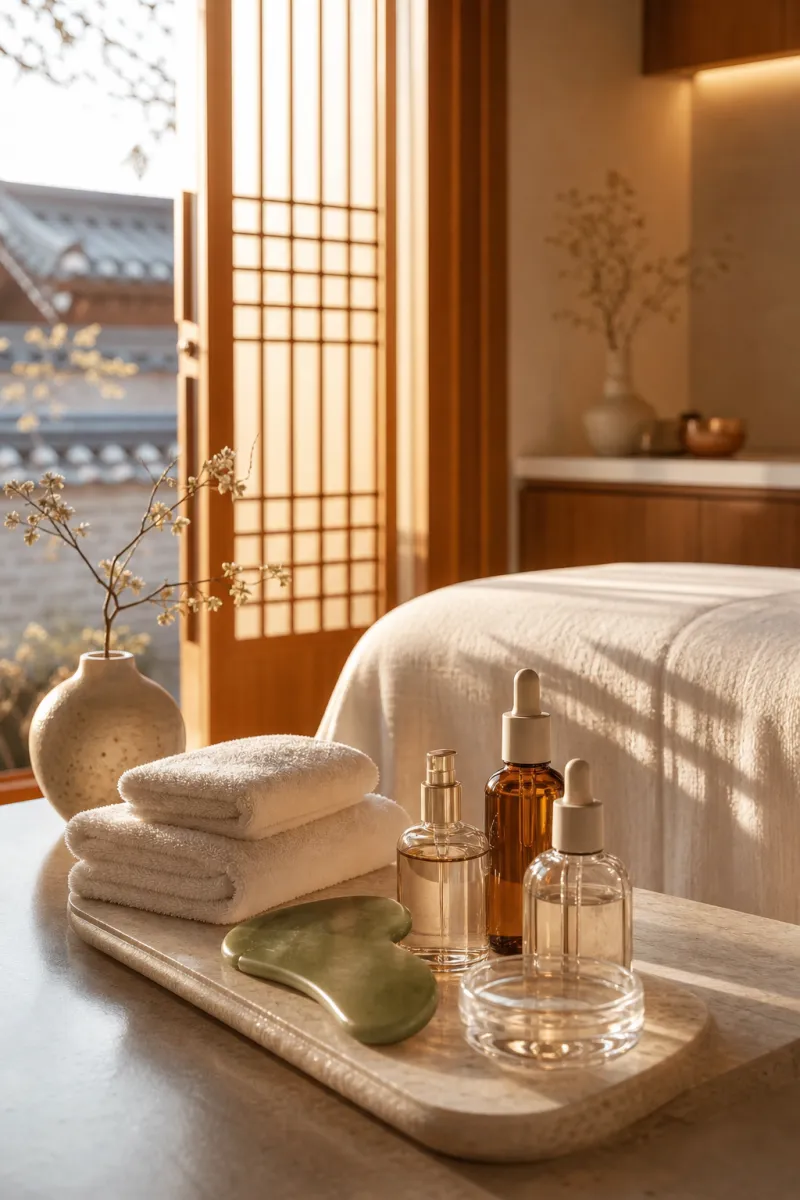
A Seoul facial spa comes in two settings, a care room inside a medical skin clinic or an independent shop run by estheticians, and the setting changes more than the decor. In a clinic-run room a doctor is usually in the building, the shelf may hold clinic-only acids, and a reaction can be examined the same day. An independent spa keeps to cosmetic care of healthy skin: cleansing, gentle exfoliation, massage and masks, with no diagnosis. This page compares the two on staff, product strength and records, then covers what to do if redness or swelling appears during the session or after the flight home.
Guide
Who works on your face in each setting
In a clinic-run spa room, the person at the bed is usually an esthetician or a nurse, while the doctor handles assessment and anything that breaks the skin. Ask at check-in who is in the room and who can be called if your face reacts halfway through.
In an independent spa, the esthetician runs the whole visit. Korean rules treat needles, energy devices and prescription-strength agents as medical acts that belong in a clinic, so a standalone spa menu stays at the skin surface.
| Point | Clinic-run spa room | Independent spa |
|---|---|---|
| Who performs the facial | Esthetician or nurse, doctor in the building | Esthetician |
| Skin assessment | A doctor may look at problem areas first | A cosmetic skin chat, no diagnosis |
| Products on the shelf | Cosmetic lines plus clinic-only peels and ampoules | Cosmetic products made for spa use |
| If a reaction appears | Can be examined and treated on site | Session stops, referral to a clinic |
| Paperwork | Chart notes, consent form, sometimes photos | Varies, so ask for product names in writing |
Guide
How strong the products can be in each room
The exfoliating step is where the two settings differ most: spa products are cosmetic grade, while a clinic room may use peels sold only to medical institutions. Arif, in a 2015 review in Clinical, Cosmetic and Investigational Dermatology, describes salicylic acid as an oil-soluble beta hydroxy acid that works into pores, and reports that superficial salicylic acid peels are generally well tolerated, with mostly mild, short-lived dryness or flaking.
Strength still matters. Costa and colleagues, reviewing peeling complications in the Journal of Cosmetic Dermatology in 2017, note that results and complications both follow peel depth, and that darker skin, certain agents and sun after treatment raise the risk. Ask for the acid's name before the step starts.
- Which active ingredient is in the exfoliating step?
- Is it rinsed off after a set time or left on?
- Can I photograph the label before it goes on?
Guide
Records that help a doctor later
If something goes wrong, any doctor first asks what went on the skin, for how long, and who applied it. A clinic-run room usually charts this; in a standalone facial spa in Korea, record keeping varies, so the job may fall to you. Take a daylight photo of your face before the session and photograph each product label.
Guide
If your skin reacts during the session
Mild warmth and a pink flush are common after exfoliation and usually fade within hours. Sharp stinging, building burning, hives or swelling around the eyes mean stop. Say so at once; the product should come off with cool water, and nothing new should go on until the cause is clear.
In a clinic-run room, ask the doctor to look before you leave. In an independent spa, get the product names in writing and visit a clinic the same day if burning has not settled within an hour or so.
- Stop: speak up as soon as stinging feels wrong
- Rinse: cool water, no fresh mask or serum
- Record: product names, photos of the skin and labels
- Escalate: a doctor the same day if burning or swelling persists
Guide
If a reaction shows up the next day or after you fly home
Some reactions are slow. The 2017 review by Costa and colleagues lists swelling, persistent redness, itching, allergic reactions, breakouts, infection, cold sore flare-ups and changes in pigment among the problems that can follow a peel. Redness that spreads instead of fading, crusting, small blisters or a cold sore on the lip are reasons to see a doctor rather than wait it out.
Dark patches can appear weeks later, especially on deeper skin tones and after sun. Keep the product list and photos with your travel papers, wear sunscreen daily, and mention any history of cold sores before the session, not after.
Evidence
Research behind this page
- Review in peeling complicationsJournal of Cosmetic Dermatology · 2017 · doi:10.1111/jocd.12329
Review linking peel complications to peel depth, skin type, agent and sun exposure, and describing reactions from irritation and pigment change to scarring.
- Salicylic acid as a peeling agent: a comprehensive reviewClinical, Cosmetic and Investigational Dermatology · 2015 · doi:10.2147/ccid.s84765
Review describing salicylic acid as an oil-soluble peeling agent suited to oily and acne-prone skin, with mostly mild, temporary side effects at superficial strength.
FAQ
Questions about Facials in Hongdae
Does a doctor see me at a clinic-run facial spa in Korea?
Not always, so ask when you book whether a doctor will look at your skin before the facial starts. In many clinic-run rooms the esthetician or nurse performs the session and the doctor is called only for assessment, prescription-strength peels or a reaction. Knowing who is available changes what you can safely request. If you have acne, pigment patches or a recent flare of eczema, asking for a short doctor check first is a reasonable request.
Can I ask a facial spa in Seoul, Korea which acid is in the peel step?
Yes, and a well-run room will tell you the ingredient and whether it is a cosmetic exfoliant or a clinic peel. Salicylic, glycolic, lactic and mandelic acids behave differently, and strength matters as much as the name. If staff cannot name what goes on your face, choose a hydrating facial without the acid step for that visit and ask again next time.
Can a facial spa in Seoul treat acne or melasma?
No, a spa facial is cosmetic care and does not treat skin conditions such as acne or melasma. It can cleanse, soften and hydrate healthy skin, and the fresh look usually lasts a few days. Persistent acne, patches or redness deserve a doctor's review; diagnosed rosacea stays with your own doctor. Booking a skin assessment first, then a gentle spa session, keeps the roles separate and avoids strong products on skin that needs a plan.
What should I do if a spa facial in Seoul leaves a rash the next day?
Stop all new products, return to a plain cleanser and moisturizer, and see a doctor if the rash spreads, itches badly or blisters. Photograph the rash in daylight and keep the list of products used during the session. Contact allergy and irritation can look alike, and the doctor will want both pieces of information. Avoid scrubbing, heat and direct sun on the area until it has calmed.
Should I tell the therapist about a history of cold sores?
Yes, mention cold sores before anything touches your face, because exfoliation and peels can trigger a flare. The 2017 review by Costa and colleagues lists herpes recurrence among peel complications. In a clinic-run room the doctor may suggest skipping the acid step or other precautions. In an independent spa, ask for a facial that avoids exfoliation around the mouth and lips entirely.